
Discover the ingredients behind traditional incense, learn what charcoal-free really means, and choose the right fragrance for your daily rituals.
Incense has been part of Indian homes and spiritual traditions for generations. From morning puja to evening meditation, its gentle fragrance often marks a moment of prayer, reflection, or simply a peaceful pause in a busy day.
But have you ever wondered what goes into the incense you burn at home? Understanding the ingredients can help you make informed choices about the products you bring into your living space.
At Dhritā – Eternal Purity, we believe fragrance should be chosen with care, awareness, and an appreciation for the ingredients that create it. Let us explore the world of incense and discover what makes each type different.
1. What Goes into Incense?
Traditional incense is made using a combination of ingredients that provide structure, help the product burn, and create its characteristic aroma. The exact composition varies depending on the type of incense and the manufacturer’s formulation.
Common ingredients include:
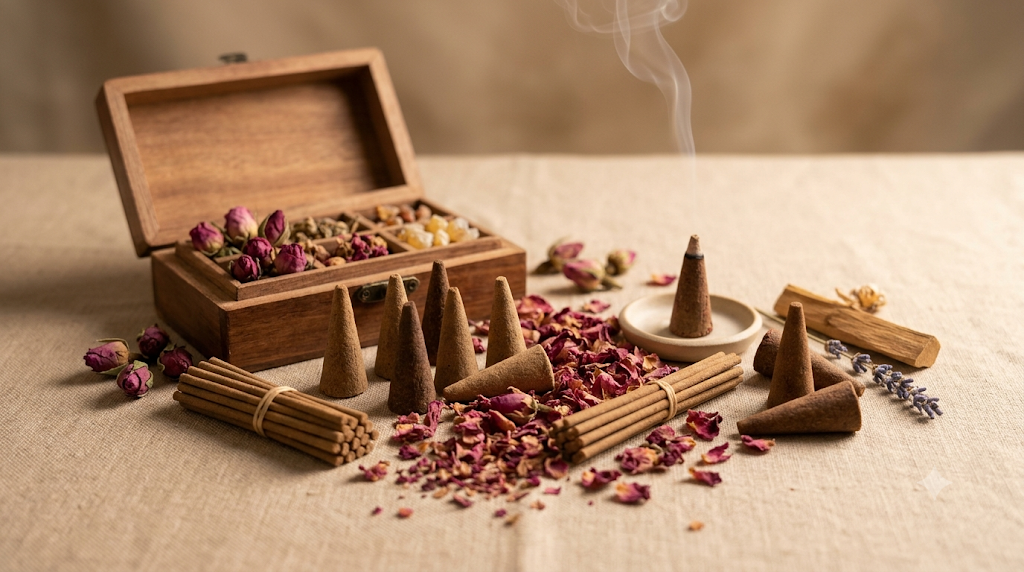
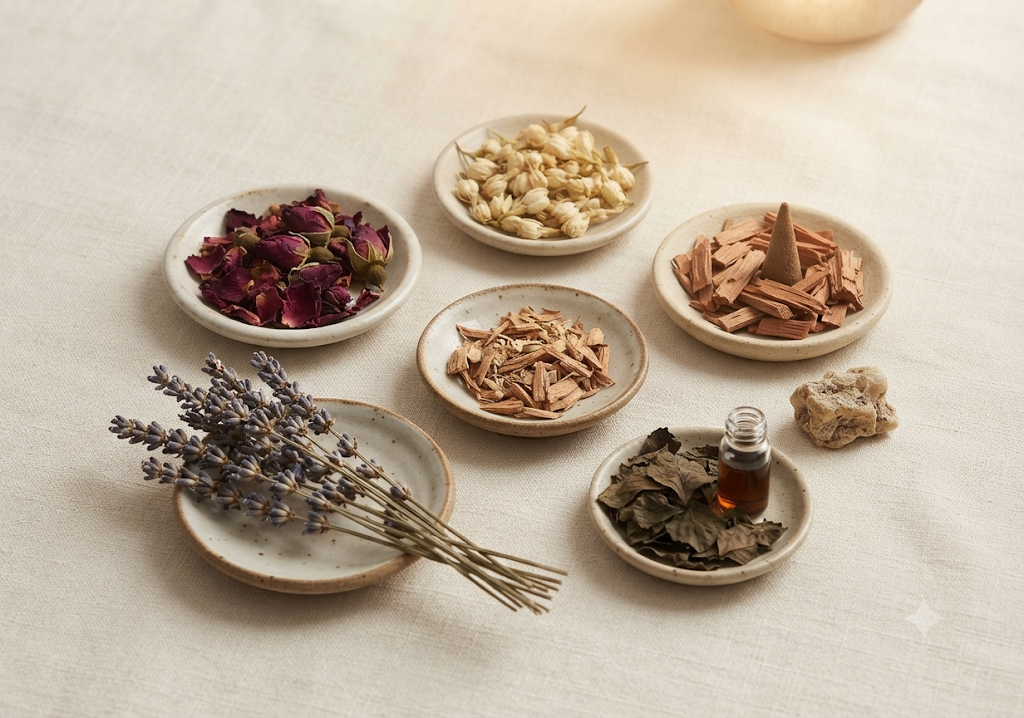
Botanical powders: Plant-based materials, dried flowers, herbs, and wood powders may contribute texture and fragrance.
Wood powders: Sandalwood and other aromatic woods have long been valued in traditional incense-making for their distinctive scents.
Natural aromatic resins: Ingredients such as guggal and loban are used in traditional fragrance and ritual preparations. They offer rich, resinous aromas.
Binding materials: Certain plant-derived materials help hold incense powders together, particularly in sticks and cones.
Fragrance ingredients: Essential oils, aromatic extracts, or fragrance blends may be added to achieve a particular scent, depending on the formulation.
Not every incense product contains all these ingredients. Some formulations also use charcoal, additional combustion materials, or synthetic fragrance ingredients. Reading the product label and checking the manufacturer’s ingredient information is therefore important.
2. What Does Charcoal-Free Incense Mean?
Charcoal-free incense is made without charcoal as an ingredient. Depending on the formulation, it may use plant powders, wood powders, binding materials, and other suitable ingredients to create a product that burns and releases fragrance.
Some customers prefer charcoal-free options because they want to understand what goes into their daily rituals and explore alternatives to conventional incense.
However, it is important to understand that charcoal-free does not automatically mean smoke-free, toxin-free, or completely harmless. Burning any incense can release smoke, fine particles, and other combustion by-products. The amount and composition depend on the ingredients and burning conditions.
When choosing incense, look beyond a single label claim. Consider the ingredient information, manufacturing transparency, fragrance quality, and instructions for safe use.
3. Natural Incense vs Conventional Incense
The word natural is often used when discussing incense, but products can differ considerably in their composition.
Natural or botanical-style incense may contain plant powders, aromatic woods, resins, and other ingredients derived from natural sources. Conventional incense may use a wider variety of materials, including charcoal and manufactured fragrance blends.
Neither the word natural nor the presence of botanical ingredients alone tells you everything about a product’s emissions or safety.
Here are a few things to consider when making your choice:
- Check the ingredients: Look for clear information about the materials used.
- Understand fragrance claims: Essential oils, aromatic extracts, and fragrance oils are not interchangeable terms.
- Look for transparency: Choose brands that explain their products honestly.
- Consider your space: Room size, ventilation, burning duration, and individual sensitivity all matter.
An informed choice begins with understanding the product rather than relying on a single marketing claim.
4. How to Choose the Right Incense Fragrance
Fragrance is personal. The aroma that feels comforting to one person may be too strong or unfamiliar for another. Choosing incense according to your preferences and the occasion can make your daily ritual more enjoyable.
Rose: Soft and Floral
Rose has a familiar floral character that many people associate with traditional Indian rituals. It can be a lovely choice for prayer, festive occasions, or moments when you prefer a floral fragrance.
Jasmine: Rich and Sweet
Jasmine offers a fuller floral aroma. Its sweet, distinctive character makes it an option for evening rituals and creating a fragrant atmosphere at home.
Mogra: Traditional and Intensely Floral
Mogra is cherished in Indian fragrance traditions for its rich floral character. It may appeal to those who enjoy a classic floral aroma during puja and other personal rituals.
Sandalwood: Warm and Woody
Sandalwood is known for its warm, smooth, woody fragrance. It is a popular choice for traditional worship, quiet reflection, and meditation spaces.
Lavender: Fresh and Herbal-Floral
Lavender has a fresh, herbal-floral aroma. Some people enjoy it as part of an evening routine or while reading and unwinding. Its scent should not be treated as a substitute for medical or mental health care.
A simple tip: Start with a fragrance you already enjoy. If you are sensitive to strong aromas, choose a milder product, burn it for a shorter duration, and keep the room well ventilated.
5. How to Use Incense Safely at Home
Incense can be part of a meaningful daily ritual, but safe burning practices are essential.
- Use a suitable holder: Place sticks or cones in a stable, heat-resistant incense holder.
- Choose a ventilated area: Keep windows open or ensure adequate ventilation while burning incense.
- Keep it away from flammable materials: Maintain distance from curtains, paper, fabrics, dried flowers, and other combustible items.
- Never leave burning incense unattended: Extinguish it completely before leaving the room or going to sleep.
- Keep it away from children and pets: Place burning incense and hot ash out of their reach.
- Be mindful of sensitivities: Smoke and fragrance can irritate some people. Avoid burning incense around anyone who experiences discomfort, and follow any relevant medical advice.
- Dispose of ash carefully: Allow the incense and its holder to cool completely before handling or cleaning them.
A mindful ritual should always include attention to the people, animals, and environment around you.
6. Bringing Intention to Your Everyday Rituals
Incense does not need to be reserved for special occasions. For many households, lighting incense is a familiar way to mark the beginning of the day, prepare a prayer space, or create a moment of stillness.
You might choose a floral fragrance for your morning puja, a woody aroma for quiet reflection, or a fragrance you personally enjoy during an evening routine.
There is no single fragrance that everyone must choose. What matters is finding an option that suits your preferences, understanding its ingredients, and using it responsibly.
Small rituals can help give structure to the day. The fragrance becomes one part of the experience, alongside the intention and attention you bring to the moment.
Discover Thoughtful Fragrance with Dhritā
At Dhritā – Eternal Purity, we appreciate the place fragrance holds in everyday living and traditional rituals. Our incense collection includes floral and woody fragrance options designed for moments of prayer and personal rituals.
Whether you are drawn to rose, jasmine, mogra, lavender, or sandalwood, take time to explore the fragrance that feels right for you.
Choose with awareness. Enjoy fragrance mindfully. Make room for meaningful moments in your everyday life.
Dhritā – Eternal Purity
Fragrance for your everyday rituals.
Frequently Asked Questions
1. Is natural incense always better than conventional incense?
Not necessarily. Product composition, manufacturing quality, emissions, ventilation, and how the incense is used all matter. Check the ingredients and choose products from manufacturers that provide clear information.
2. Is charcoal-free incense smoke-free?
No. Charcoal-free incense can still produce smoke and combustion by-products when burned. Use it in a well-ventilated area and avoid prolonged or unattended burning.
3. Which incense fragrance is best for meditation?
There is no universal answer. Sandalwood, lavender, jasmine, and other fragrances may appeal to different people. Choose an aroma you find pleasant and keep its intensity comfortable.
4. Can incense be burned in a closed room?
It is best to avoid burning incense in a poorly ventilated or enclosed space. Provide adequate ventilation and discontinue use if anyone experiences irritation or discomfort.
5. How can I identify good-quality incense?
Look for clear ingredient information, transparent product claims, suitable packaging, and straightforward usage and safety instructions. A strong fragrance alone does not indicate better quality.
Explore more: Discover Dhritā’s incense collection and learn more about choosing fragrance for your everyday rituals.